
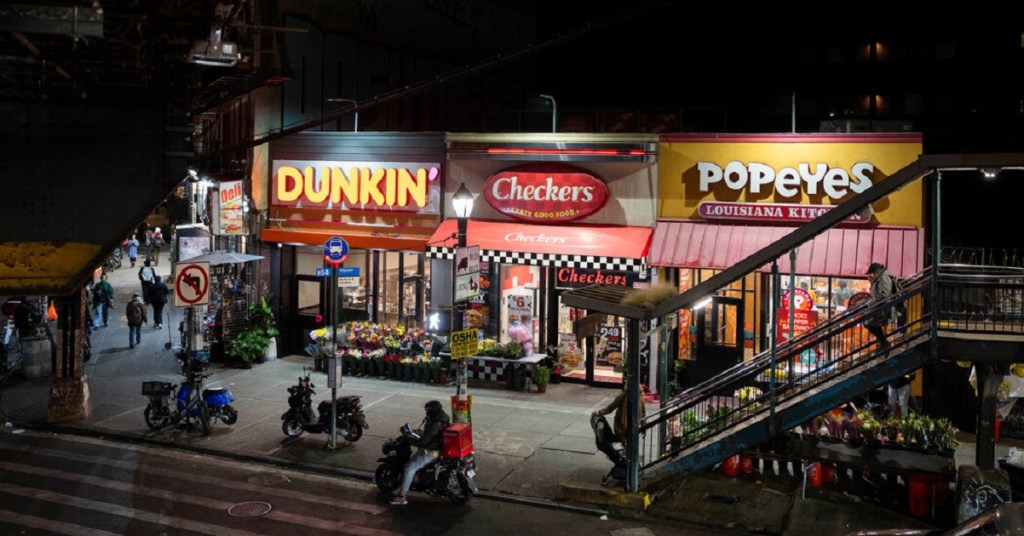
The intersection of Myrtle Avenue and Broadway in Brooklyn, New York, is a bustling crossroads that encapsulates the borough’s rich history, dynamic culture, and urban transformation. Located in the neighborhoods of Bedford-Stuyvesant and Bushwick, this intersection serves as a gateway between diverse communities and a site of constant motion, offering a mix of local commerce, historical significance, and a vivid representation of Brooklyn’s ongoing evolution.

Historically, Myrtle Avenue and Broadway have long been vital arteries in Brooklyn’s transportation and commercial networks. Myrtle Avenue, one of Brooklyn’s oldest streets, stretches from Downtown Brooklyn through Fort Greene, Clinton Hill, and Bedford-Stuyvesant, eventually reaching Queens. Known as the “Avenue of the Americas” in its early days, it has always been a key east-west route. On the other hand, Broadway has served as a major north-south connector, running parallel to the East River and providing an essential link between Williamsburg and Ridgewood.

During the late 19th and early 20th centuries, this intersection was a focal point of industrial and residential growth. Factories, small businesses, and housing developments grew rapidly as immigrant communities, particularly Eastern European Jews and Italian-Americans, settled in the surrounding neighborhoods. Over the decades, these immigrant groups were joined by African-American and Latino populations, creating the vibrant and diverse cultural fabric that defines this area today.

One of the most iconic features of the Myrtle Avenue and Broadway intersection is the elevated train line, part of the MTA’s J, M, and Z subway services. The Myrtle Avenue station, sitting atop the intersection, has been in operation since 1888, making it one of the oldest continuously running elevated subway lines in New York City. This above-ground infrastructure provides a unique urban aesthetic, casting long shadows over the streets below and offering a striking contrast to the brownstones and low-rise buildings that define much of the surrounding area.

The constant flow of subway trains, buses, cars, cyclists, and pedestrians make this intersection a transportation hub that connects commuters to various parts of Brooklyn, Queens, and Manhattan. Its proximity to other transit lines also enhances its importance, as residents use the intersection to transfer between the M, J, Z, G, and L subway lines.
At street level, the intersection of Myrtle and Broadway is a vibrant commercial zone. Small businesses, ranging from bodegas, beauty supply stores, and fast-food spots to long-standing local shops, line the streets, serving both the immediate community and travelers passing through. The area has seen a mix of old and new businesses in recent years, reflecting the changing dynamics of Brooklyn’s economy.

The rich cultural diversity of the surrounding neighborhoods is evident in the variety of cuisines and retail offerings available at this intersection. Whether it’s Caribbean, Mexican, Dominican, or classic New York-style pizza, foodies can experience a taste of the local flavor. The area also has a growing art scene, with street murals and graffiti adding color and a sense of identity to its urban landscape.
In recent years, Myrtle Avenue and Broadway, like many parts of Brooklyn, have experienced rapid gentrification. The nearby neighborhoods of Bushwick and Bedford-Stuyvesant, once known for their affordable housing and working-class communities, have seen an influx of young professionals and artists. This shift has brought with it a wave of new development, including luxury apartments, cafes, and boutiques, but also rising rents and concerns about displacement among long-term residents.
The changes at this intersection reflect the broader trend of urban redevelopment happening across Brooklyn, as the borough transitions from its industrial past to a more residential, commercially oriented future. However, the tension between preserving the neighborhood’s historical character and accommodating new development continues to be a defining issue for the community.
While Myrtle Avenue and Broadway is not home to many traditional tourist landmarks, it is surrounded by sites that reflect Brooklyn’s diverse heritage. Nearby, the Myrtle Avenue Plaza offers a community space for outdoor events and markets. The Pratt Institute, a renowned art and design school, is located just west of the intersection, influencing the local creative scene. Additionally, several historic churches and cultural institutions reflect the area’s deep religious and community ties.
For those interested in exploring further, the Brooklyn Navy Yard, a symbol of Brooklyn’s industrial might, is a short trip away, and the Maria Hernandez Park in Bushwick provides a green oasis amidst the urban environment.
The intersection of Myrtle Avenue and Broadway is more than just a transit point; it is a microcosm of Brooklyn’s complex history and vibrant culture. As the neighborhoods surrounding this intersection continue to change and grow, it remains a vital part of Brooklyn’s identity, embodying both the challenges and opportunities that come with urban transformation. Whether you’re a longtime resident, a commuter passing through, or a newcomer exploring the area, this intersection is a gateway to understanding the spirit of one of New York City’s most iconic boroughs.
#dunkin #checkers #popeyes #lego #brooklyn #nyc #newyork #foodie #fastfoodie




 World Todai
Leave a comment